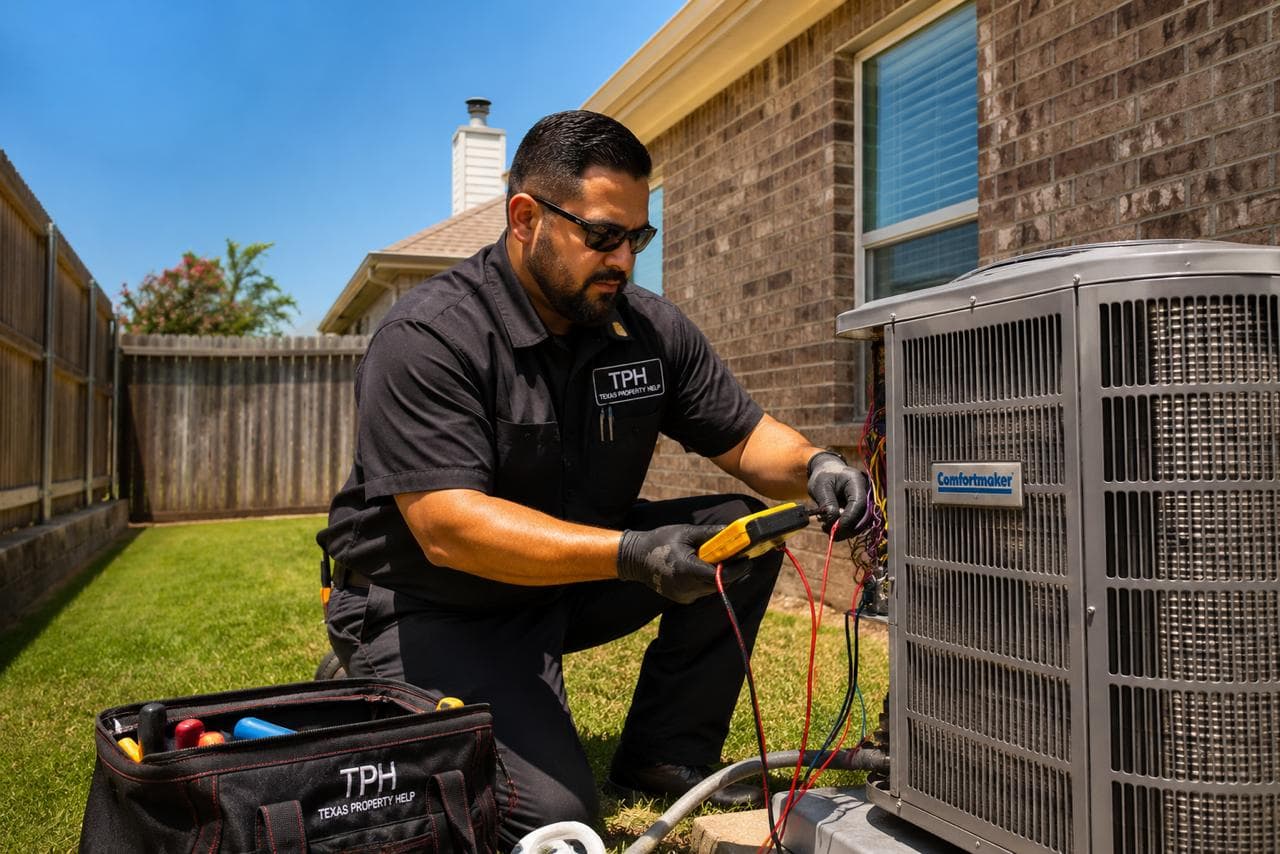
HVAC Repair & Replacement
Help in Texas
In Texas heat, a failed HVAC system is more than uncomfortable — it can be a health risk. Whether you need emergency repair or are evaluating replacement options, we connect you with the right resources.
⚠️ Heat Safety: If AC fails during a heat advisory, prioritize safety — consider cooling centers or temporary accommodations for vulnerable family members.
How We Help
HVAC Services We Connect You With
Emergency AC Repair
For urgent situations — especially during extreme Texas heat — we help connect you with emergency HVAC service resources.
HVAC Repair Referrals
Qualified HVAC technicians for diagnosis and repair of cooling, heating, and ventilation systems.
System Replacement
When repair is not cost-effective, we help you understand the replacement process and how to evaluate quotes.
Storm-Related Damage
Hail and storms can damage outdoor HVAC units. We help you document storm damage for your insurance claim.
HVAC Financing
HVAC replacement is a significant cost. We help you explore financing options that reduce the upfront financial burden.
Insurance Documentation
If storm damage is involved, proper HVAC documentation is critical for a complete and accurate insurance claim.
Why HVAC Matters More in Texas
Disclaimer: Texas Property Help connects homeowners with information and service provider referrals. We are not a contractor, insurance company, or financial institution. Final hiring, coverage, and financing decisions are the homeowner's responsibility.
Decision Guide
Repair or Replace? How to Decide
Texas homeowners face this question more often than most — extreme heat accelerates wear. Here's how professionals evaluate the decision.
- →System is under 8 years old
- →Repair cost is less than 50% of replacement
- →Issue is isolated (capacitor, refrigerant, fan motor)
- →System has been well-maintained
- →Manufacturer warranty still covers parts
- →System is 12+ years old
- →Repair cost exceeds 50% of new unit
- →R-22 refrigerant system (phased out, expensive)
- →Frequent breakdowns in past 2 years
- →Energy bills spiking despite maintenance
The 5,000 Rule: Multiply the age of your unit by the estimated repair cost. If the result exceeds $5,000, replacement is typically the smarter investment. Example: a 12-year-old unit needing a $500 repair = $6,000 → consider replacement.
SEER Ratings — What Texas Homeowners Need to Know
SEER (Seasonal Energy Efficiency Ratio) measures how efficiently an AC unit cools your home. Higher = cheaper to run. Texas has federally mandated minimums.
Federal Tax Credit (2024–2025): The Inflation Reduction Act allows homeowners to claim up to 30% of HVAC replacement cost (max $600 for AC, $2,000 for heat pumps) if the new unit meets efficiency thresholds. Consult a tax professional to verify eligibility for your situation.
Warning Signs Your Texas AC Needs Attention
Weak or warm airflow
Could indicate low refrigerant, failing compressor, or clogged filter/ducts
Ice on the unit or lines
Refrigerant leak or airflow restriction — turn off immediately to prevent compressor damage
Spiking electricity bills
An inefficient system working harder than normal to maintain temperature
Grinding or squealing noises
Failing motor bearings or loose components — needs prompt inspection
Water pooling around unit
Clogged condensate drain — can cause water damage to walls and flooring
Uneven temps room to room
Duct leaks, zoning issues, or undersized unit for your home's square footage
Storm Damage & Your HVAC System
Hail and severe storms frequently damage outdoor condenser units in Texas. Here's what to document for your insurance claim.
HVAC Help FAQ
HVAC Problem in Texas?
Submit a request and we will help connect you with HVAC repair, replacement, and financing resources in your area.