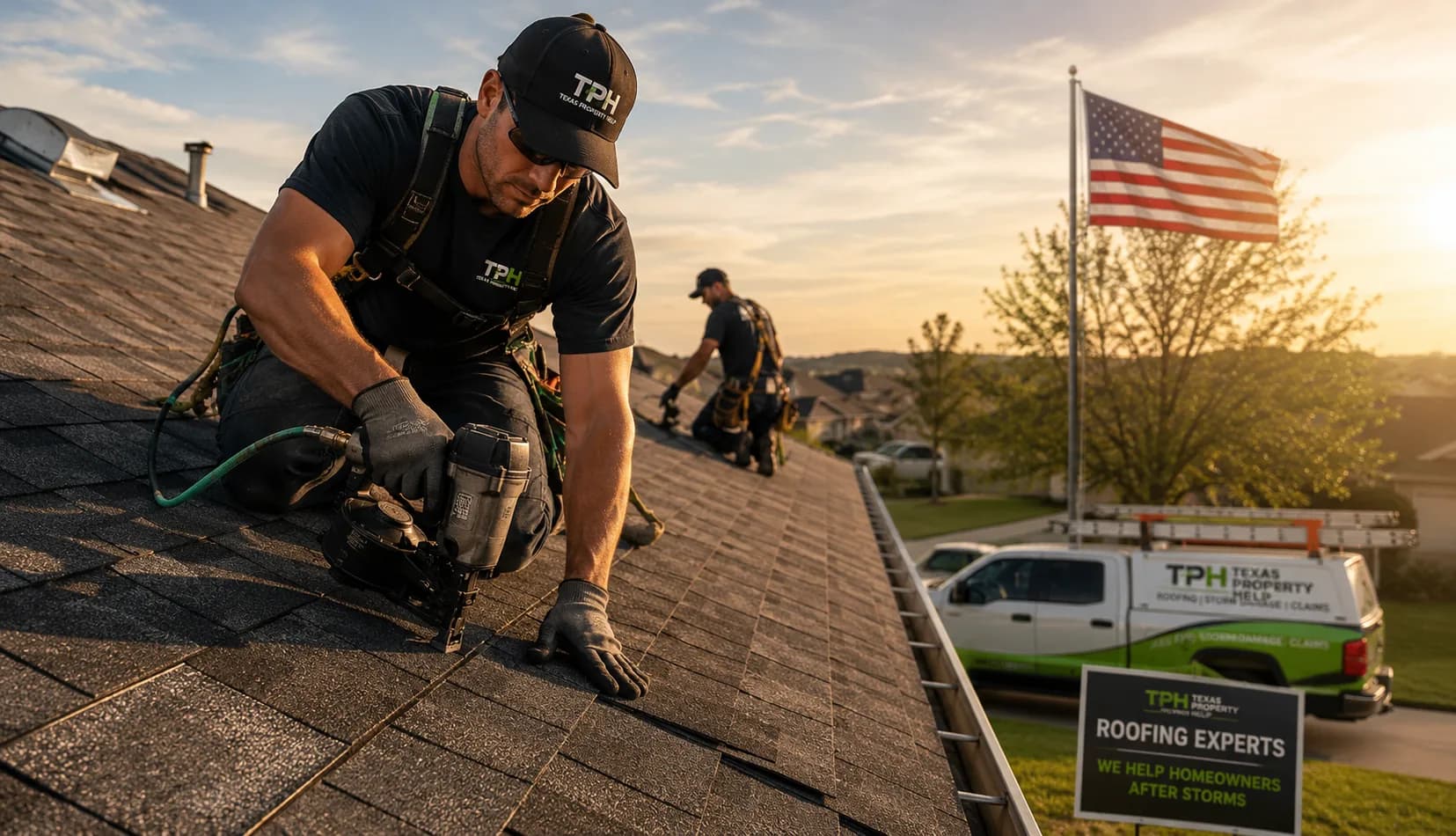
Roofing Help for
Texas Homeowners
From inspection to full replacement — get connected with Texas roofing professionals who know insurance claims, local codes, and storm damage.
Check the contractor before work starts
Texas has no statewide roofing license. Ask who issued any claimed credential, check current insurance and confirm local permit requirements. Greenville, for example, publishes its own reroof permit guidance; your city may differ.
Compare written bids and avoid blank contracts or offers to waive your insurance deductible.
Sources: City of Greenville roofing packet · TDI contractor-scam guidance. Checked September 8, 2026.
Services
How We Can Help With Your Roof
Roof Inspection
A professional inspection can identify damage, assess remaining lifespan, and document issues for insurance claims.
Roof Repair
Partial repairs for specific damage areas — missing shingles, flashing issues, small leaks — when full replacement is not needed.
Roof Replacement
Full re-roofing when damage is extensive, the roof is at end of life, or an insurer requires replacement after a covered loss.
Insurance Claim Support
Understanding what roofing documentation your insurer needs and how to communicate effectively throughout the claim process.
Emergency Leak Response
Active roof leaks need immediate attention. We can connect you with emergency response resources.
Financing Options
Roofing costs can be significant. Explore financing options that may help when insurance does not cover the full cost.
What to Expect When Getting Roofing Help
Free Initial Consultation
We review your request and match you with local roofers; confirm inspection fees before booking.
Professional Roof Inspection
A roofer documents damage with photos and gives you an honest assessment — repair or replace, and what the insurance scope might look like.
Written Estimate
You receive a written estimate before any work begins. Never agree to work without a written contract.
Insurance Coordination
Your roofer communicates with your adjuster and can submit supplements for missed items in the scope of work.
Completed Work & Warranty
Reputable Texas roofers provide workmanship warranties. Keep your paperwork for future insurance and resale purposes.
Disclaimer: Texas Property Help is a homeowner assistance and referral platform. We are not an insurance company, insurance agent, or public adjuster. We do not guarantee claim approval, coverage amounts, or outcomes. All insurance decisions are made solely by your insurance company. Consult a licensed public adjuster or attorney for formal claims assistance.
Materials
Roofing Materials Common in Texas
Texas climate — extreme heat, hail, hurricane-force winds, and intense UV — puts specific demands on roofing materials. Understanding your options helps you make the right call after storm damage.
Asphalt Shingles
Pros: Most common in Texas. Low upfront cost, easy to replace, widely available. 3-tab shingles last 15–20 years; architectural shingles 25–30 years.
Watch for: More vulnerable to hail and UV degradation than metal. Check if your policy covers like-for-like or if they'll upgrade after a storm.
Metal Roofing
Pros: Standing seam and metal panels are increasingly popular in Texas. Highly hail-resistant, rated for 140+ mph winds, reflects heat, 40–70 year lifespan.
Watch for: Higher upfront cost ($12–$25/sq ft installed). May qualify for insurance discounts. Some insurers require separate endorsement for full RCV on metal.
TPO / Flat Roofing
Pros: Common on low-slope roofs and additions. TPO membranes are UV-resistant and energy-efficient. Common in commercial and some Texas ranch-style homes.
Watch for: Requires professional installation to avoid seam failures. Inspect annually for blistering or ponding water, especially after hail.
Tile & Concrete
Pros: Clay and concrete tile are common in South Texas and San Antonio. Excellent longevity (50+ years), fire-resistant, handles heat well.
Watch for: Heavy — requires engineered roof deck support. Hail can crack individual tiles. Replacement tiles can be hard to match on older roofs.
Roofing Credentials and Local Requirements
Texas does not issue a statewide roofing license. Check the issuing organization behind any claimed credential and ask your local building department about permits for the proposed work.
Ask for current insurance documentation and references. A referral or a voluntary credential does not guarantee workmanship. See the city roofing guidance linked above.
Storm Chaser Guide →🚩 Red Flags — Walk Away If a Contractor:
- ✕Cannot explain or verify a claimed credential
- ✕Shows up unsolicited right after a storm
- ✕Asks you to sign an Assignment of Benefits (AOB)
- ✕Demands full payment upfront
- ✕Has no verifiable local address or reviews
- ✕Pressures you to decide same day
- ✕Offers to waive your insurance deductible
- ✕Has only a P.O. box or out-of-state address
Insurance
How a Roofing Insurance Claim Works in Texas
Texas homeowners have specific rights under state law. The Texas Department of Insurance (TDI) sets timelines your insurer must follow.
Document Before You Clean Up
Take photos and video of all damage from every angle before removing debris or making temporary repairs. Date-stamp your photos. Courts and adjusters rely on this documentation if a claim is disputed.
File Your Claim Promptly
Texas law gives your insurer 15 days to acknowledge your claim and 15 additional business days to accept or reject it. Filing delays can give your insurer grounds to deny. File as soon as damage is confirmed.
Get a Documented Roof Assessment
Before your adjuster arrives, have a roofing contractor inspect and document damage. Their scope can support your claim — adjusters sometimes miss items that a roofing professional will catch.
Understand ACV vs RCV in Your Policy
Actual Cash Value (ACV) policies pay depreciated value. Replacement Cost Value (RCV) policies pay to replace. On a 15-year-old roof, the difference can be thousands of dollars. Know which coverage you have before accepting a settlement.
Review the Adjuster's Scope of Work
Your insurer's estimate (scope) lists exactly what they will pay for. Review it with your contractor. If items are missing or pricing is too low, your contractor can submit a supplement — this is a normal part of the claims process.
Do Not Sign Over Your Rights (AOB)
Assignment of Benefits transfers your insurance claim rights to the contractor. This has led to fraud and inflated costs in Texas. Never sign an AOB — you can still hire any contractor you choose without giving up your rights.
Disclaimer: Texas Property Help is a homeowner assistance and referral platform. We are not an insurance company, insurance agent, or public adjuster. We do not guarantee claim approval, coverage amounts, or outcomes. All insurance decisions are made solely by your insurance company. Consult a licensed public adjuster or attorney for formal claims assistance.
Typical Roofing Costs in Texas (2025–2026)
Prices vary significantly by city, roof size, material, and current demand after storms. These are rough ranges for planning purposes.
| Service | Typical Range | Notes |
|---|---|---|
| Roof Inspection | $0–$250 | Ask about inspection fees before booking |
| Roof Repair (minor) | $300–$1,500 | Missing shingles, small leaks, flashing |
| Roof Repair (major) | $1,500–$6,000 | Multiple sections, storm damage patches |
| Full Replacement (asphalt) | $8,000–$22,000 | Typical 1,500–2,500 sq ft home in Texas |
| Full Replacement (metal) | $18,000–$50,000+ | Standing seam; higher longevity offsets cost |
| Emergency Tarp Service | $300–$1,500 | Often partially covered by homeowner's policy |
Estimates only. Get written quotes from at least two contractors before committing.
Roofing FAQ
Need a Roofer in Texas?
Submit a request and we will connect you with local roofing professionals for inspection, repair, or replacement.