Storm Damage Help for
Texas Homeowners
Hail, high winds, and severe weather can cause serious damage to your home. Knowing what steps to take — quickly and in the right order — protects your property and your insurance claim.
What We Cover
Types of Storm Damage We Help With
Hail Damage
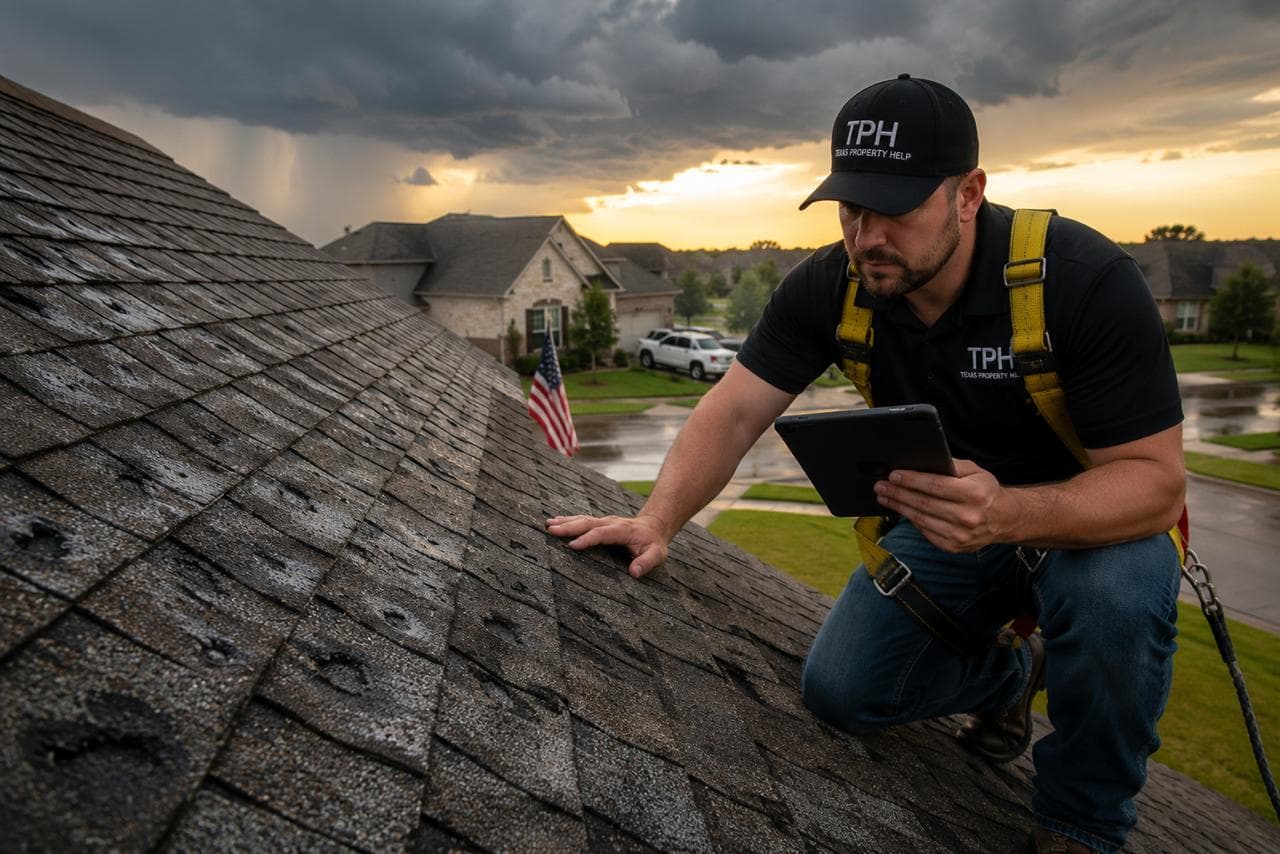
Hail can damage roofing, gutters, siding, windows, HVAC units. Damage may not be visible from the ground.
Wind Damage
High winds can lift shingles, damage fascia boards, break windows, and knock down trees onto structures.
Roof Leaks
Storm-related roof leaks need prompt attention to prevent mold, structural damage, and interior damage.
Water Intrusion
Flooding and water intrusion from storms can damage flooring, walls, and electrical systems.
Emergency Tarping
Temporary weatherproofing after storm damage can prevent additional loss. TDI says your policy should pay for the materials and labor you used — keep every receipt and confirm the detail with your insurer.
Insurance Documentation
Gathering photos, inspection reports, and repair estimates is essential for a smooth claim process.
Step by Step
What to Do After Storm Damage
Ensure Safety First
Before inspecting damage, confirm there are no structural hazards, downed power lines, or gas leaks. Call 911 if there is immediate danger.
Document Everything
Take photos and video of all visible damage — roof, siding, windows, interior water damage — before any cleanup or temporary repairs.
Make Temporary Repairs
Cover broken windows and active roof leaks with tarps or boards to prevent additional water intrusion. Keep all receipts.
Contact Your Insurance
File a claim promptly. Most policies have deadlines. Note your claim number and adjuster's contact information.
Get a Professional Assessment
Request a referral for a professional damage assessment to support your insurance documentation.
Disclaimer: Texas Property Help is a homeowner assistance and referral platform. We are not an insurance company, insurance agent, or public adjuster. We do not guarantee claim approval, coverage amounts, or outcomes. All insurance decisions are made solely by your insurance company. Consult a licensed public adjuster or attorney for formal claims assistance.
What Texas Homeowners Should Know Before They File
Four points that are the same everywhere in Texas, and a note on the hazards and local rules that differ by region.
📍 Houston
Hurricanes, tropical storms, flooding and hail are all recurring hazards on the upper Gulf Coast. Wind and hail deductibles are often separate from the main deductible — check your declarations page. Part of Harris County east of Highway 146 falls inside the TWIA windstorm area.
📍 Dallas / Fort Worth
The Metroplex sees severe spring thunderstorms with hail and straight-line wind, and tornado risk rises in spring. Permit rules differ by city: Fort Worth requires a permit once decking, sheathing, rafters or ridge boards are replaced, while shingle work alone does not.
📍 San Antonio / Central TX
TDI describes a band through Central and North Texas as Flash Flood Alley, and flood is not part of a standard homeowners policy. Hail and severe thunderstorms occur in spring. San Antonio requires a permit to re-roof a house.
📍 West Texas (Lubbock, Amarillo)
The High Plains see severe hail, tornadoes and straight-line wind that damage roofing, fencing and outbuildings. Drought-related foundation movement is a separate problem from storm damage and is commonly excluded — check your policy.
Your Rights
Texas Homeowner Rights After Storm Damage
The Texas Department of Insurance (TDI) publishes claim-handling deadlines for insurers. TDI can extend them by 15 more days after a weather-related catastrophe. Confirm current details at tdi.texas.gov.
15 Business Days to Acknowledge
TDI states your insurer has 15 business days to tell you it received your claim, start its review, and ask you for anything it needs.
15 Business Days to Accept or Deny
After getting what it needs from you, your insurer has 15 business days to tell you whether it will pay. It can extend that by up to 45 days if it explains why it needs more time.
5 Business Days to Pay After Acceptance
Once your insurer agrees to pay all or part of a claim, TDI states it must pay within five business days. Late payment can carry statutory interest; for weather-related claims the rate follows a formula set in statute rather than a fixed 18%.
Appraisal May Be Available
If you disagree with your insurer's valuation, many Texas homeowner policies include an appraisal clause: you and the insurer each hire an appraiser and a neutral umpire decides the differences. Appraisal settles the amount of loss rather than whether a loss is covered. Check whether your policy has one.
Right to a Written Denial
If your claim is denied, your insurer must provide the specific policy reasons in writing. This is your starting point for appeal or legal action.
TDI Complaint Process
If your insurer violates these rules, file a complaint at tdi.texas.gov. TDI has authority to investigate and penalize insurers. This is free and does not require an attorney.
Texas Cities We Help With Storm Damage
We connect homeowners in these cities with local contractors after storms, depending on availability:
Storm Damage FAQ
Storm Damage? Let Us Help You Get Started.
Submit a request for free guidance on documenting damage and on the claim process. Referrals to local contractors depend on availability in your area.